



Online marketplaces now represent the structural core of global digital commerce.
Industry forecasts project that global eCommerce sales will approach $7–7.5 trillion in 2026, accounting for roughly 24% of total worldwide retail sales. At the same time, estimates suggest that more than 70% of global online retail revenue flows through marketplace platforms rather than standalone web stores.
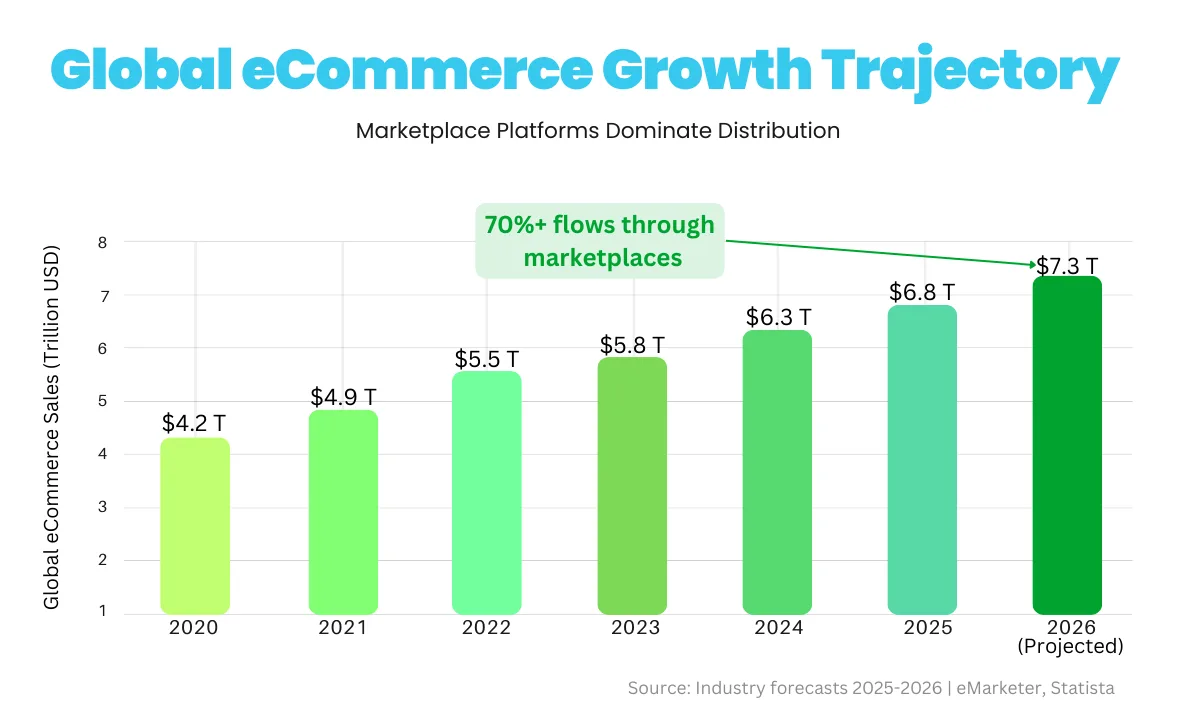
For businesses seeking growth, participation in marketplace ecosystems is no longer optional — it is strategic infrastructure.
Yet while marketplaces continue expanding in scale, their economic models have become increasingly layered. For sellers, the question is no longer simply where customers are — it is how much margin remains after platform participation.
This evolving cost structure is reshaping how businesses evaluate marketplace alignment. Within that broader discussion, newer platforms such as Foyzo Marketplace (https://foyzo.com/) are positioning themselves around simplified fee models and operational flexibility.
The Escalating Economics of Marketplace Participation
Major global marketplaces built their dominance on audience aggregation. Traffic scale created seller demand. Over time, however, fee structures expanded beyond base commission.
Today, sellers on leading platforms often encounter combinations of:
• Referral fees
• Monthly subscription plans
• Mandatory or competitive advertising spend
• Payment processing fees
• Cross-border adjustments
• Variable category rates
For example:
-
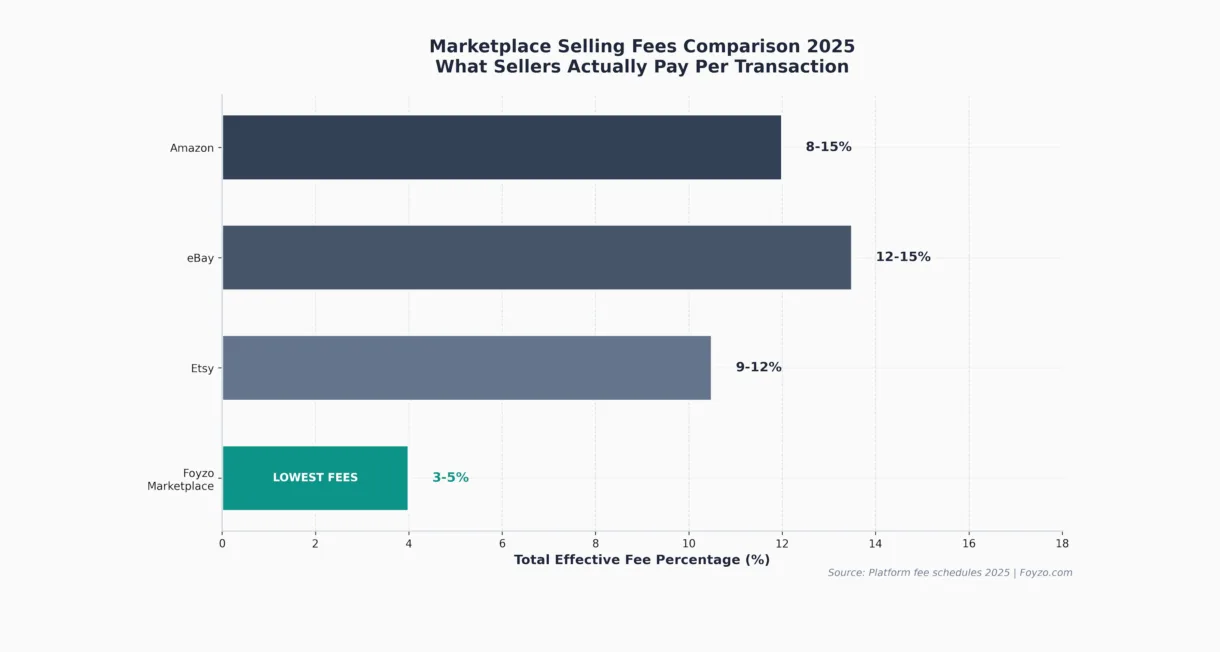
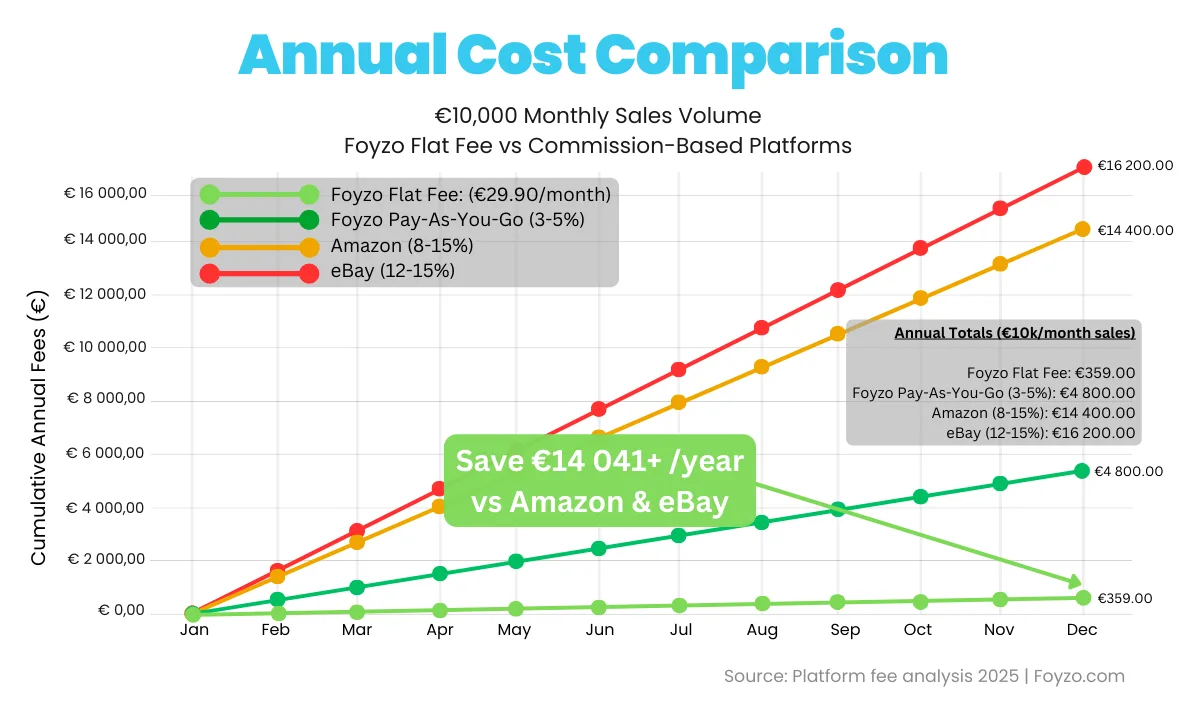
- Amazon referral fees typically range from 8% to 15%, depending on category, with some segments higher. Sellers operating under professional plans also pay monthly subscription fees, and advertising costs frequently become necessary for product visibility.
- eBay final value fees commonly range between 10% and 12.9%, depending on product category. When combined with managed payment processing fees, total effective costs often approach 12–15%.
- Etsy applies a 6.5% transaction fee, plus payment processing fees that vary by country (often around 3% plus a fixed component), resulting in effective costs frequently near 9–12% or more before optional advertising.
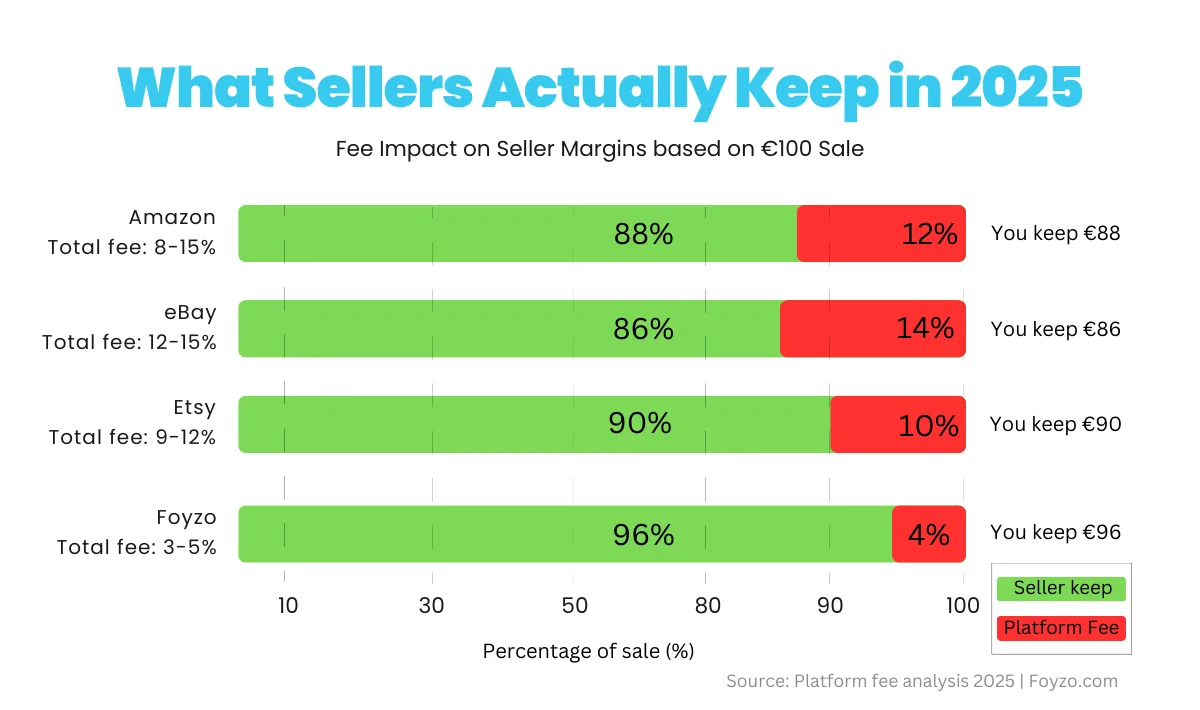
These structures do not inherently invalidate the value of large marketplaces — their traffic reach remains unmatched — but they significantly influence margin dynamics, particularly in competitive categories.
As global eCommerce expands and competition intensifies, sellers increasingly evaluate not only customer access but cost alignment.
In addition to marketplace fees, digital advertising costs have risen substantially over the past few years. Google Ads, Meta (Facebook and Instagram), TikTok, and other performance marketing channels have become increasingly competitive. Cost-per-click and cost-per-acquisition metrics in many sectors have climbed, making it easy for sellers to misallocate budgets without guaranteed return.
By concentrating traffic acquisition and promotional efforts at the marketplace level, and actively promoting Foyzo Marketplace across multiple channels, sellers benefit from shared exposure to buyers across different platforms. This reduces the need for individual sellers to depend heavily on running separate paid advertising campaigns simply to achieve initial visibility.
For small and medium-sized businesses, this means margin pressure does not come only from commission rates, but also from the growing necessity of paid visibility.
A Two-Model Response to Fee Complexity
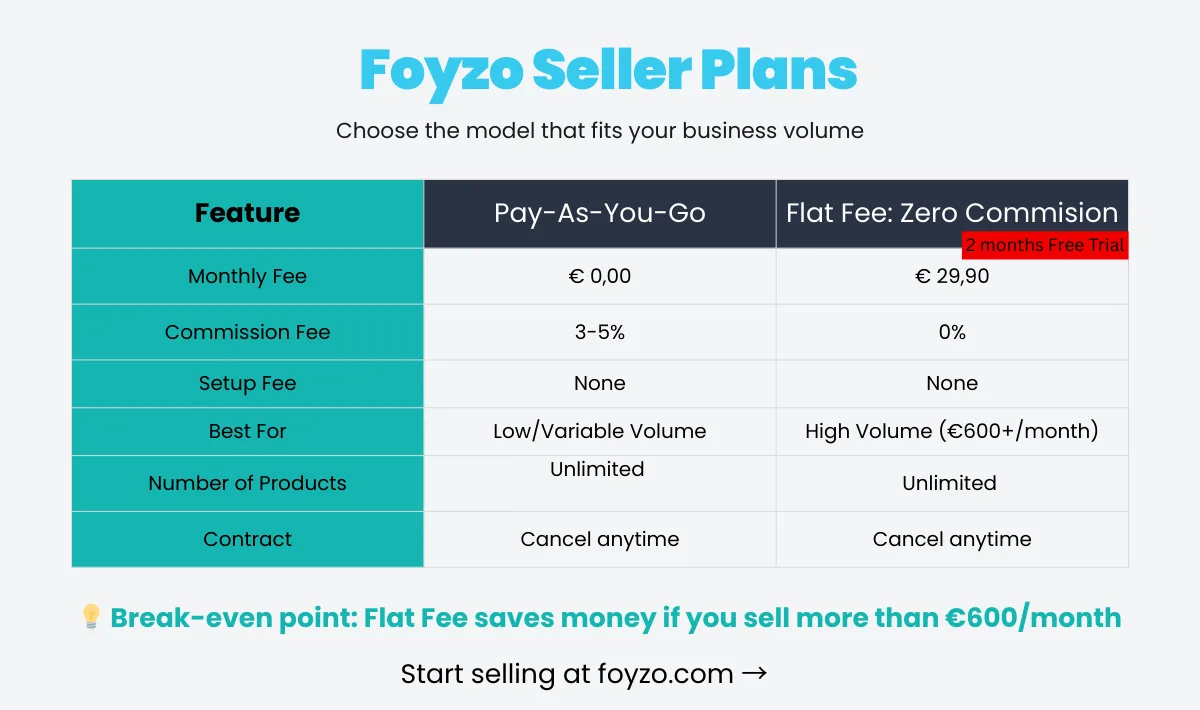
Within this environment, Foyzo Marketplace introduces a two-tier seller model designed around cost transparency.
The first structure, Pay-As-You-Go, allows sellers to register without sign-up fees or monthly subscriptions. Under this model, sellers pay commission only when a sale occurs. Commission rates range from 3% to 5%, depending on product category.
Categories such as electronics, furniture, home goods, and certain appliances operate at 3%, while segments such as fashion, beauty, sports, and software operate at 5%.
The second structure, Flat Fee – Zero Commission, is priced at €29.90 per month (EUR). Under this model, sellers retain full revenue from each transaction without per-sale percentage deductions. This option is designed for higher-volume businesses seeking predictable cost control.
Importantly, new sellers opting for the Flat Fee model benefit from a two-month free trial. During this period, sellers can evaluate the platform without financial commitment and cancel at any time before the trial ends without incurring charges. This structure reduces entry risk and allows businesses to test alignment before committing to a fixed monthly cost.
Both plans include unlimited product listings and allow sellers to transition between models without long-term contractual commitments.
In comparison to industry averages that frequently approach or exceed double-digit percentages, a 3–5% commission structure represents a materially different cost base. The significance lies not only in the lower percentage itself but in the clarity of the economic framework.
Operational Friction as a Hidden Cost
Beyond direct fees, marketplace participation involves operational complexity.
Expanding into new marketplaces often requires manual product uploads, CSV restructuring, listing corrections, image adjustments, and inventory synchronization. For businesses managing large catalogs, migration can require weeks of administrative effort.
Foyzo addresses this through free product import and catalog migration assistance. Sellers currently operating on Shopify, WooCommerce, Amazon, eBay, Etsy, PrestaShop, or other can request support for data export, formatting, listing preparation, and upload.
In an era where multi-channel selling is increasingly recommended as a risk-mitigation strategy, reducing migration friction lowers the barrier to diversification.
The Hybrid Retail Imperative
Retail in 2025 operates across multiple interconnected channels.
Digital-native brands often combine direct-to-consumer websites with marketplace exposure. Traditional brick-and-mortar retailers are expanding into digital channels to complement physical presence. Social commerce continues rising, while cross-border eCommerce expands rapidly.
In this hybrid environment, marketplaces are less about exclusivity and more about distribution layering.
Foyzo’s structure appears positioned to serve this multi-channel strategy. For online-first businesses, it offers diversification. For offline retailers, it provides entry into online commerce without the immediate need for full eCommerce infrastructure investment.
As retail ecosystems converge, platform flexibility becomes strategically relevant.
Global Reach as a Structural Advantage
As cross-border eCommerce continues to grow, geographic limitations have become increasingly restrictive for both buyers and sellers.
Many standalone websites or smaller platforms operate primarily within national boundaries, limiting sellers’ exposure and buyers’ access to international inventory.
Foyzo Marketplace positions itself as a bridge between buyers and sellers across markets, with a particular focus on the UK and European Union while maintaining global reach. This model allows sellers to access audiences beyond domestic borders and enables buyers to discover products not confined to a single country.
In a digital economy where logistics networks and international fulfillment have become more accessible, marketplace platforms that facilitate cross-border discovery can expand opportunity on both sides of the transaction.
Trust Infrastructure and Buyer Confidence
Economic alignment alone is insufficient. Marketplace sustainability also depends on buyer trust architecture.
Without structured protection mechanisms, transaction hesitation can limit repeat engagement, particularly for newer platforms.
Foyzo integrates several buyer-facing systems:
Buyer Protection Guarantee – If disputes cannot be resolved directly between seller and customer, the platform reviews cases in accordance with marketplace policies. Coverage includes non-delivery, damaged goods, or items significantly different from their description.
30-Day Money-Back Framework – Most unused items in original condition may be returned within 30 days of delivery. Approved refunds are processed to the original payment method, subject to category-specific exclusions.
Secure Payment Processing – Transactions are processed through established global providers such as Stripe and PayPal, with encrypted handling of payment data consistent with industry standards.
In mature marketplaces, such mechanisms are expected. For emerging platforms, implementing structured trust systems early contributes to long-term credibility.
Marketplace Differentiation in a $7 Trillion Economy
With global eCommerce approaching $7 trillion annually, marketplace competition is entering a new phase.
In earlier stages of growth, audience aggregation determined success. Today, sellers increasingly consider:
• Fee predictability
• Margin sustainability
• Advertising dependence
• Policy stability
• Operational overhead
• Exit flexibility
As major platforms continue refining monetization strategies, alternative models that emphasize cost transparency and simplified economics are likely to gain attention among businesses evaluating diversification.
Foyzo’s approach — combining lower commission tiers with a flat-fee alternative and migration support — reflects a broader movement toward economic simplification within marketplace design.
Conclusion: Alignment as the Next Marketplace Advantage
The marketplace model now dominates global digital retail. The structural question facing sellers is not whether to participate, but how to allocate channel exposure strategically.
As fee structures across major platforms evolve, cost alignment becomes increasingly important. Platforms that balance access with economic transparency may appeal to businesses seeking long-term sustainability rather than short-term visibility alone.
Foyzo Marketplace represents one iteration of this evolving marketplace philosophy. By offering lower commission tiers relative to industry norms, a predictable flat-fee option, and operational support mechanisms, it reflects growing seller demand for clarity in platform economics.
In a global eCommerce economy approaching $7 trillion annually, the next competitive advantage may not be scale alone — but alignment between platform structure and seller sustainability.
Prefer Watching Instead?
🎥 Watch the full video breakdown of marketplace fees and seller cost comparisons below:

 The Marketplace Economy in 2026: Why Cost Structure Is Becoming the Real Competitive Battleground
  From Fitness Supplement to a Pillar of Modern Nutrition: The New Role of Protein